iMac (Tray-Loading Models, 1998-1999)
System Specifications
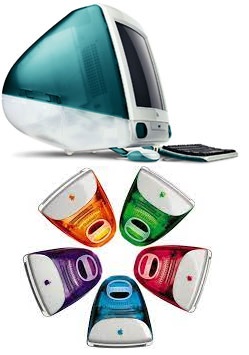 Processors:
-IBM/Motorola PowerPC 750 "G3" (Al) 233MHz (Revision A and B)
-IBM PowerPC 750L "G3" (Cu) 266MHz (Rev C), 333MHz (Rev D)
-(Unofficial) Sonnet HARMONi G3
-512KB of external L2 cache running at 1:2 clock also rated at 1/2 the CPU card's stock speed, can be upgraded to 1MB using larger chips.
-15" (13.8" viewable) integrated shadow-mask CRT display, supporting a maximum resolution of 1024x768 at 75Hz.
-Rev A Only: ATi Rage IIc PCI with 2MB of SGRAM, expandable to 6MB
-Rev B, C, D: ATi Rage Pro Turbo PCI with 6MB of SGRAM, already upgraded from the factory)
Note: The PCI notation does not indicate the cards are removable/upgradable, but rather the internal bus they run on according to the chips themselves.
-2 SO-DIMM PC66/PC100 SDRAM slots on CPU card, expandable to 384MB (Rev A) or 512MB (Rev B, C, D).
-3.5" Parallel ATA (UDMA/33) Hard Disk Drive
 Have the first ~8GB of your drive partitioned for the OS to prevent issues with a failure to start up.
-24x CD-ROM drive, "laptop-style" Parallel ATA
-Crystal CS4211-KM Sound Chipset
-10/100 Ethernet
-56K V.90 Modem
-2 USB 1.1 ports
-Audio in/out jacks, plus 2 inputs on front
-RJ11 Modem Jack
-IrDA 4mbit/s (Rev A and B only)
-RJ45 Ethernet Jack
-"Mezzanine" Slot (Rev A and B only)
-(Internal) DB-15 Video Out
-Mac OS 8.1 to 9.2.2
-Mac OS X 10.0 to 10.3.9
Can start 10.4.11 using XPostFacto, but performance without a CPU upgrade and L2 cache upgrade will not be pleasant.
If you have a G4 CPU installed, 10.5.8 can boot, but don't expect it to be fast.
-OpenBSD PowerPC
-Windows NT 4.0 SP1 PowerPC, using maciNTosh (HTTPS required!)
-Various PowerPC GNU+Linux distributions, such as Gentoo or Debian
Known Issues
Thankfully, this wasn't the one where most of the design was influenced by some questionable ideas from Steve Jobs (more on this on the slot loader page). This is the ONLY G3 iMac to use a fan for cooling, the 2nd generation "slot-loading" iMacs were passively cooled, which caused a multitude of overheating issues along with major component failure being very common.
However, these don't have it as good either. The flyback transformers (especially on the Rev A) tend to wear out over time, and they will make a "snap" noise every now and then... this is because the transformer is failing and needs to be replaced. Another issue that I've seen pop up more recently involves leaking capacitors on the Power Supply and Analog Boards. While this is much less severe than anything before this computer's release, it can cause problems; I have a Rev D which would not power on again until it was completely discharged, and replacing some of those capacitors fixed the issue. One last thing, a good chunk of these iMacs are affected by the dreadful Maxell PRAM batteries exploding and killing your motherboard. If you get one of these, do NOT be in a rush to turn it on and check the motherboard FIRST! Thankfully on these it's very easy to remove, remove a bottom panel that's held on by some tight clips and a screw, then remove 2 screws that are near the motherboard tray, unplug a few cables, and carefully remove it. Apple should really make computers THIS easy to service again!
My thoughts
This is one of those computers that's so iconic and sought after, it's hard to find one for a good price unless you find someone who's completely unaware of the clusterfuck that is the Vintage Computing market. And of course, if you can't find one locally, you'd have to worry about shipping... ask me how I know.
Aside from that, the computers themselves are nice machines. Sure, they're not as reliable as the Sawtooth Power Mac G4, but they aren't bad and could make a nice basic OS 8/9 machine. You can run OS X on these, but performance will not be great. These are probably the easiest iMacs to work on (motherboard side, that is) so it's not difficult to do something as basic as swap the PRAM battery or upgrade the Hard Drive. These are also some of the few iMacs that I know of to have the ability to replace the CPU; the next time that would be possible was with the Intel iMacs (with the exception of the Mid 2014 iMac, or as I call it, the "comically large MacBook Air"). This is also one of the only computers that has expandable VRAM, too.
Steve Jobs didn't seem to have much oversight on the Tray-Loader's development, which was probably a good thing. He was a great guy and all... but some of his ideas for the computers that he envisioned were not the best for what was possible at the time. Some of which, were not the best whatsoever. Remember how I said these were the only G3 iMacs to have a fan? Jobs wanted the slot-loaders to be silent, but uhhhh..... that already required more than removing a fan. Honestly, noise is sometimes more beneficial than no noise. More on that later.
