iMac (Slot-Loading Models, 1999-2001)
Summary
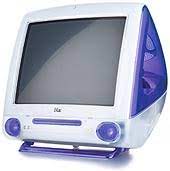
The Slot-loading iMac G3 (also known as the iMac DV), are the second generation of iMacs introduced on October 5th, 1999. This is an all-in-one computer sporting a 15 inch CRT display, internal speakers and microphone, and several color options that can fit anywhere as needed. These were discontinued on May 6th, 2003, as it was fully replaced with the eMac.
System Specifications
 Processors:
-IBM PowerPC 750L "G3" 350MHz-400MHz (Late 1999)
-IBM PowerPC 750L "G3" 350MHz-500MHz (2000-Early 2001)
-IBM PowerPC 750CXe "G3" 500MHz-700MHz (Summer 2001)
-(Unofficial) Motorola PowerPC 7410 "G4" BGA chip swap (1999-2000 only)
-15" (13.8" viewable) integrated shadow-mask CRT display, supporting a maximum resolution of 1024x768 at 75Hz.
-1999: ATi Rage 128 VR with 8MB of VRAM
-2000, Early 2001: ATi Rage 128 Pro with 8MB of VRAM
-Select Early 2001 models, Summer 2001: ATi Rage 128 Ultra with 16MB of VRAM
Note: VRAM is not user-expandable unlike the tray-loading models.
-2 PC100 SDRAM DIMM slots, supporting up to 1GB of RAM
-3.5" Parallel ATA (UDMA/66) Hard Disk Drive
Supports up to 128GB of addressable hard disk space as per the UDMA/66 standard.
-Proprietary internal slot-loading CD-ROM, CD-RW, or DVD-ROM drive
-Apple "Screamer" audio chipset
-10/100 Ethernet
-56K V.90 Modem
-2 USB 1.1 ports
-2 FireWire 400/IEEE 1394 ports (not available on 350MHz)
-Audio in/out jacks, plus 2 inputs on front
-RJ11 Modem Jack
-RJ45 Ethernet Jack
-AirPort 802.11b Wi-Fi, optional
-VGA monitor output (Mirrored, not on 350MHz models)
-Mac OS 9.x
-Mac OS X 10.0 to 10.4.11 (10.3.9 for 350MHz models)
IMPORTANT: Before installing Mac OS X, update the firmware to 4.1.9f1.
350MHz models can start 10.4.11 using XPostFacto, but performance will suffer either way.
-OpenBSD PowerPC
-Various PowerPC GNU+Linux distributions, such as Gentoo or Debian
Known Issues
For the uninitiated, these are the least reliable G3 iMacs made; this is caused by a multitude of problems, most notably the ommission of an active cooling fan. Steve Jobs was watching this project more closely... which led to some questionable design choices. Sooo... be prepared to read. :)
First thing I mentioned was the lack of an active cooling fan. Steve Jobs wanted this iMac to be virtually silent (kid named ball bearing hdd:) so he completely removed the cooling fan from the design and the computer was passively cooled. The issue with this was that the computer already required some cooling for the G3 processor (especially on faster models), under the condition that there would be a full-on CRT monitor sitting on that aluminum plate where the CPU was dissipating heat. This put out so much heat to a point where it wore out the components much faster; common failures involved the Power/Analog/Video (PAV) board that provided exactly what it stands for. If that component fails, you won't be able to use the computer. Some people have managed to add small cooling fans to the computer by tapping in 12V or 5V from the HDD connector and making the necessary molex adapter to run all the hardware.
Speaking of the CRT section, it's held on with a poorly made inner bezel. The plastic, for whatever reason, is extremely brittle. Apple actually cut a lot of costs with the slot loading models, and this is an example where that's obvious. The inner bezel part for these is highly sought after and very hard to find. It is responsible for supporting almsot the entire computer; if it breaks, good luck putting it all back together.
Another common component failure is the infamous slot-loading optical drive; the belts can wear down and cause issues where the disc gets stuck or can't be ejected. This is really more of something that happens with age, but it's been an issue for a very long time. The designs for these older slot-loading drives are very complicated, especially compared to the common laptop slot-loading drives found in iBooks, (most) G4 PowerBooks, and MacBooks. You think it would be easy to replace the drive... but not really. Apple flipped the optical drive connector 180 degrees to prevent it working with other drives without properly fitting in. Thankfully, recent discoveries have showed the 50-pin optical drive connector is nothing more than an extended IDE connector with power pins (and analog audio?) tacked on. Someone on Thingiverse has made a 3D-printable bracket, and has linked to a video on installation (though it is in german).
The other components that commonly fail are the internal Harman/Kardon speakers, which almost always suffer from foam rot. You can easily find replacement speaker drivers; ones commonly used are 4-Ohm, 3-Watt 1-inch speaker drivers with black foam and silver cones. These work perfectly, though they are a bit thinner so you will need to adhere it to the front of the speaker housing. Installation is as simple as wiring positive to positive, and negative to negative. Soldering may be required.
My thoughts
Honestly, these computers are just... overrated. I prefer the design of the tray-loading iMac since it was easier to work on, and somewhat more reliable. I also prefer the eMac over these because it's one of the few Apple all-in-ones which deviated away from all the strict design measures on other products that caused problems (despite a lot of them being made at the height of the capacitor plague). They're beautiful, don't get me wrong; but the design also causes problems for those trying to maintain and preserve these computers. Parts are difficult to find as are working units. When these died, people commonly threw them out. I've also noticed the tubes on these are of lower quality than the tray-loaders and other 15 inch AIOs from Apple.
If you ever get one of these properly working, they can make great machines for late Classic Mac OS programs. These are some of the faster G3s Apple has made so you shouldn't have any trouble with OS 9. Mac OS X works better on these since the Rage 128 provided better support than the Rage IIc or Pro Turbo from the previous models, and by using Shuriken, 10.4.11 can run well on these. It's not my first choice for OS X though.
I tried not to make this all look too opinionated, but it's difficult not to ramble about issues when a computer has a lot of them. These are iconic, don't get me wrong! However, not a lot of people seem to be aware of the issues these computers have. Partly that's the reason I write these pages is to inform people about issues before buying or working on a certain computer they want to use for whatever they need it for. I've worked on computers for over a decade; I was pulling CPUs out before I learned multiplication! That aside, these are cool to have in your collection. They're slowly becoming harder to find, and more prone to failure as time passes.
Also, I'm gonna remind you again.